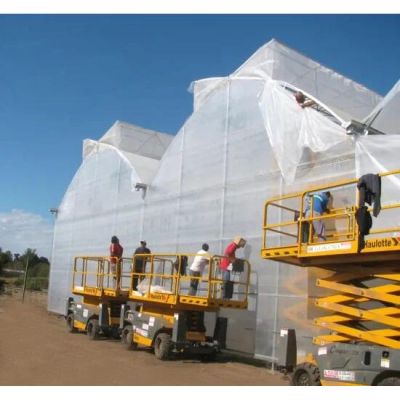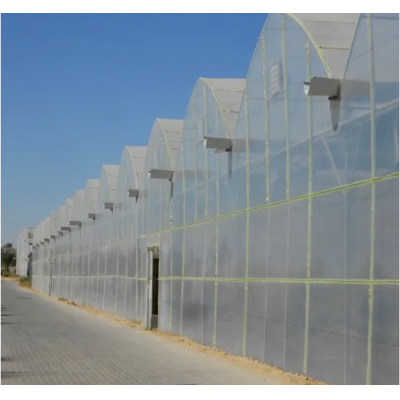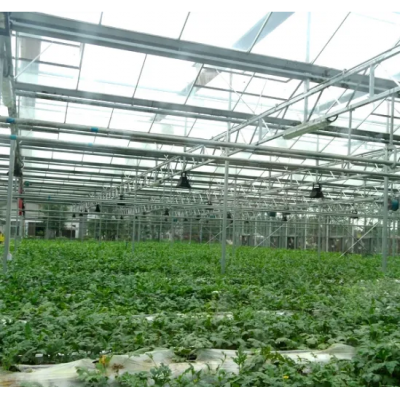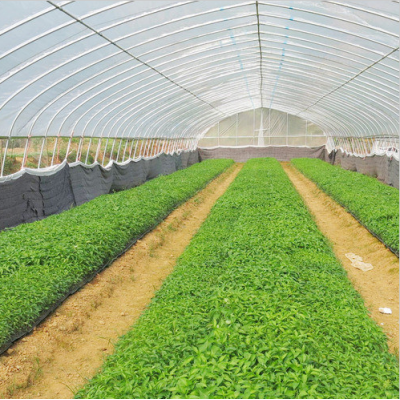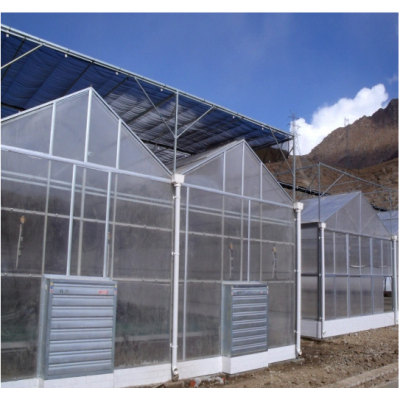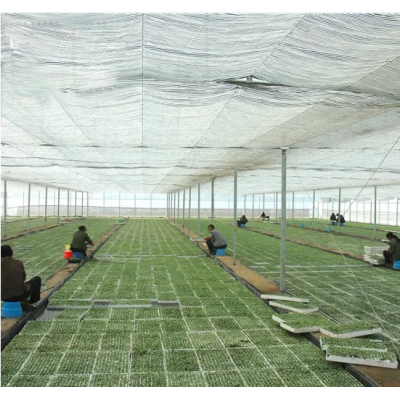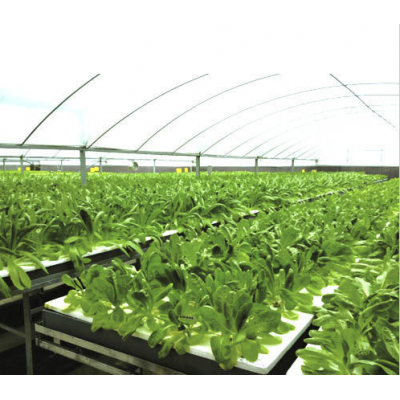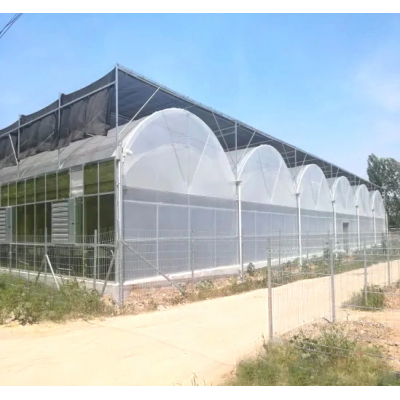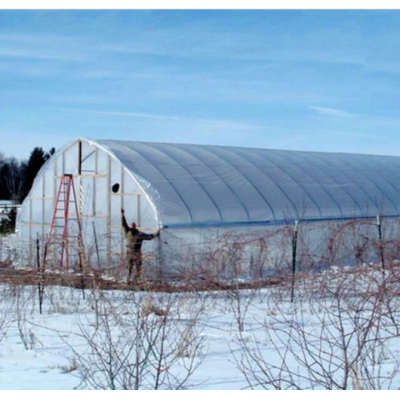


Every grower who’s watched a tunnel collapse under wet, heavy snow knows the real loss isn’t the frame—it’s the full crop underneath. This commercial single-span film greenhouse sits on a 200-275 g/m² hot-dip galvanized steel skeleton, engineered for regions with consistent snow and wind load pressure. The 150-micron anti-drip UV film cuts fungal disease risk, and modular bolt-together assembly cuts on-site labor time. Spans adjust from 6 to 9 meters, tuned to your local climate. No welding, no weak points. Built for commercial tomato, pepper, and strawberry operations that can’t afford downtime.

Every grower who’s watched a tunnel collapse under wet, heavy snow knows the real loss isn’t the frame—it’s the full crop underneath. That’s the core problem this commercial single-span film greenhouse is built to solve. It’s constructed on a hot-dip galvanized steel frame with a 200-275 g/m² zinc coating, aligned with European standard EN ISO 1461 for agricultural corrosion resistance. Covered with 150-micron UV-stabilized anti-drip PE film, it’s designed for large-scale commercial vegetable operations where a single structural failure can wipe out an entire season’s revenue.
Arch spans range from 6 to 9 meters, with spacing customized to your local climate. In heavy snow regions, we tighten arch spacing and steepen the roof pitch. In high-wind zones, we reduce unsupported film area. Each tunnel stands independently—no shared gutters, no cascading failure if one section takes damage. And because it’s fully bolt-together with zero on-site welding, every joint retains its full factory zinc coating.
We’ve seen too many operations cut corners on frame spec only to replace it five years in. This structure is built to outlast three or four film replacements.
200-275 g/m² hot-dip galvanized steel frame
Here's what that means in practice: The zinc coating isn’t just a line on a spec sheet. In coastal or high-humidity areas, thinner zinc layers can start showing rust at clamping points in as little as 3-4 years. At 200-275 g/m², you’re in the range that keeps those joints clean through multiple heavy rain seasons. No welded joints means no spots where zinc gets burned off during assembly—every connection stays fully protected. That’s the difference between a 20-year frame and one that starts failing in year five.
150-micron UV-resistant anti-drip PE film
The reason this specification matters: 150 microns hits the exact balance point—thick enough to resist tearing under wind load, thin enough to maintain consistent light transmission for crop growth. The anti-drip treatment is what separates a clean crop from constant fungal pressure. On untreated film, condensation forms droplets that act like tiny magnifying glasses, focusing light and creating fungal hotspots. Anti-drip film spreads moisture into a thin sheet that runs down the sides instead of dripping directly on plants.
Customizable arch spacing (6-9M span)
On sites where heavy snow loads are the primary concern, this becomes critical: Tighter arch spacing puts more structural steel under the snow, and a steeper roof angle helps it slide off before it accumulates to dangerous weight. In windy regions, the same adjustment reduces unsupported film area. In hot climates, you can widen spacing and add roll-up side ventilation for maximum cross-flow. There’s no universal best spec—it depends on your site. That’s why we tune every order to your coordinates.
Tool-free modular bolt-together assembly
What the spec sheet doesn't tell you: All parts are prefabricated and join with standard bolts and nuts. No welding team required. That matters because in markets where skilled farm labor comes at a premium, every hour saved on installation directly improves your project ROI. The modular design also means you can expand, reconfigure, or disassemble the structure later without cutting steel. You’re not locked into a single permanent layout.
No foundation required
The practical impact is straightforward: You can deploy this structure on prepared soil without pouring concrete footings. For leased land, trial crop plots, or phased expansion projects, that flexibility changes the entire ROI calculation. You’re not sinking capital into permanent infrastructure that stays behind if you relocate.

Large-scale tomato operations across North America and Northern Europe deploy this greenhouse for extended-season protected production. The heavy-duty galvanized frame holds up under consistent winter snow loads that would collapse lighter tunnel systems, and the anti-drip film keeps humidity-related diseases in check through cool, damp months. Bell pepper and strawberry growers in Southeast Asia use the wide-span ventilation configuration, with roll-up sides paired with UV-blocking film to prevent midday heat buildup. Flower nurseries specializing in cut roses and foliage run multiple parallel spans to create uniform microclimates, with independent tunnels isolating disease risk. In African high-altitude growing regions, the no-foundation design allows rapid rollout for high-value cash crops like snow peas and herbs, with minimal site preparation.

When you're comparing quotes, here's what to actually look at—because the number on the quote doesn’t tell you half the story.
First, the zinc coating spec. A lot of suppliers will say “galvanized” and leave it at that. What they don’t specify is how much zinc is actually on the steel. At 200-275 g/m², our frames meet EN ISO 1461—that’s the European standard for long-term corrosion resistance in agricultural environments. Lower-spec alternatives often use thinner coatings, and in a humid greenhouse that difference starts showing up as rust spots around clamps and joints within a few years. Unlike welded structures where every joint becomes a corrosion starting point, our bolt-together system keeps the factory zinc layer 100% intact. You’ll replace the film three or four times over the frame’s lifespan. The frame itself shouldn’t need replacing.
Second, installation efficiency. As highlighted in ongoing industry discussions about agricultural labor shortage 2026, skilled on-site labor is getting harder to source and more expensive by the season. Our modular system assembles with standard hand tools and a small crew. No generator, no welding consumables, no waiting for joints to cool before tensioning the film. And because all parts are standardized, you can add another tunnel next season without trying to match an old custom-welded layout.
Third, verified quality and compliance. Ziyang Bozong holds ISO 9001 quality management certification and CE marking for our structural systems. That’s not marketing language—it means our production process is audited, materials are traceable, and structural designs meet European safety requirements. When you’re importing full container loads of steel structure, that documentation matters at customs and it matters if you ever need to file a warranty claim.
Fourth, real customization, not one-size-fits-all. You might not need the heaviest frame spec if your site is sheltered by surrounding terrain. You might need a different ventilation setup for strawberries versus processing tomatoes. We spec arch spacing, roof height, and ventilation based on your location and crop, not a generic catalog number. The film carries a 5-year anti-UV warranty, backed by material traceability through our supply chain.

The 2026 Farwest Show Announces a New Automation Summit
Q: What is the lifespan of different types of greenhouses?
A: Up to 3-5 years for film, 20+ years for glass and polycarbonate greenhouses. Film covers require replacement every 3-5 years, while the galvanized steel frame lasts over 20 years. Glass and PC panels offer longer service life with minimal maintenance, making them ideal for permanent installations. Our greenhouse frames use hot-dip galvanized steel pipes with a double-sided zinc coating of 200-275 g/m², providing uniform, dense, and strongly adherent protection specifically engineered for high-humidity greenhouse environments and long-term corrosion resistance.
Q: How long does it take to install a commercial greenhouse?
A: Installation typically takes 2-4 weeks depending on project size and complexity. Standard multi-span greenhouses can be erected in 10-20 working days by our experienced technical team at Ziyang Bozong. On-site assembly time varies based on local conditions and project scale, but we provide detailed installation manuals and remote guidance to streamline the process.
Q: Can you customize greenhouse specifications for my farm?
A: Yes, we offer full customization including dimensions, span width, height, covering materials, and ventilation systems. Simply share your crop type, local climate conditions, and growing area requirements, and our engineering team at Ziyang Bozong will design a tailored solution that optimizes your growing environment and maximizes ROI.
Q: What is your warranty policy for greenhouses?
A: Our galvanized steel frame comes with a 5-year warranty against corrosion and structural defects. Film covers include a 3-5 year UV warranty depending on the grade selected, while glass and PC panels are covered by manufacturer warranties. Ziyang Bozong provides technical support and replacement parts throughout the lifespan of your greenhouse.
Q: What is the advantage of a multi-span greenhouse over multiple single-span tunnels for large-scale commercial production?
A: The primary advantage is land utilization efficiency. Multi-span greenhouses eliminate the gaps between individual tunnels—typically 1-2 meters per gap depending on drainage and access requirements—which can represent 10-15% of total land area in large single-span installations. This additional growing area translates directly to higher production capacity within the same land footprint. Beyond land savings, the continuous interior space simplifies equipment movement, reduces travel time for workers and machinery, enables more efficient irrigation system layout, and creates uniform growing conditions across the entire structure—supporting consistent crop quality and simplified management protocols.
Q: Can this single-span greenhouse handle heavy snow loads like we see in northern North America and Scandinavia?
A: Yes, when configured correctly. The 200-275 g/m² hot-dip galvanized steel frame is engineered for regions with significant seasonal snow accumulation. What makes the difference is arch spacing—tighter spacing (closer to the 6-meter end of the range) puts more structural steel under the snow load, and a steeper roof pitch helps snow slide off before it builds to critical weight. Share your location’s typical snow conditions and we’ll spec the span and arch geometry to match. The bolt-together design also eliminates the weak welded joints where snow-loaded frames most commonly fail.
Q: For a 5-hectare commercial tomato farm, what’s the recommended span and layout approach?
A: With a 9-meter span, each tunnel delivers consistent growing width with good airflow for tomato trellising. A 5-hectare operation will require multiple parallel tunnels, with spacing between them for drainage and machinery access. We typically recommend leaving adequate room for sprayers and harvest equipment between bays. The modular nature of the system means you can phase installation—start with a core set of tunnels, establish your crop rotation, and add more as market demand grows. Share your field dimensions and we’ll draft a layout proposal.
Q: What does the customization process look like for a large commercial order?
A: It starts with your site details: location, crop type, available land, and local climate patterns. Our engineering team drafts a proposed spec covering span width, arch spacing, height, and ventilation options. We refine the design with your feedback, then confirm final pricing and production timelines aligned with your project schedule. All custom configurations come with full structural documentation and installation guidance.