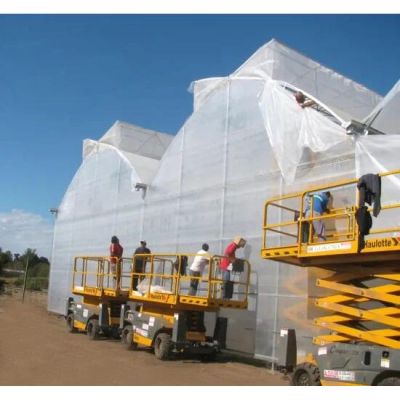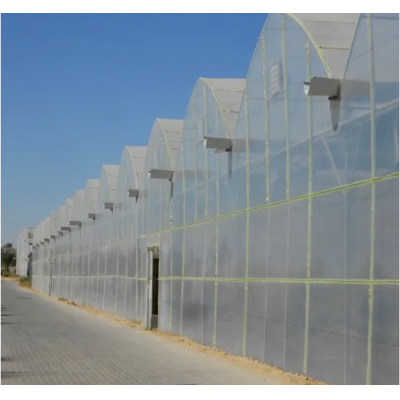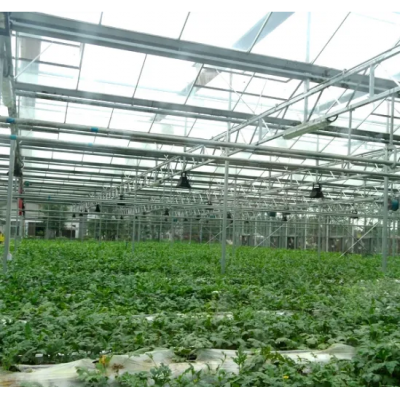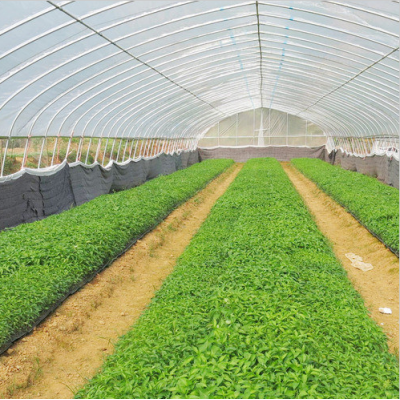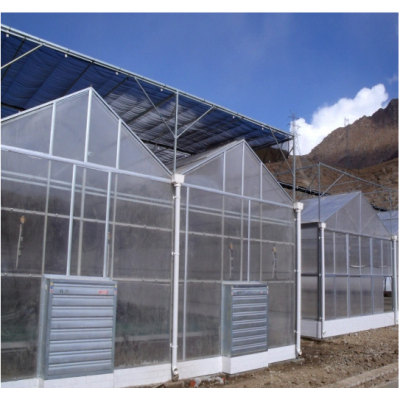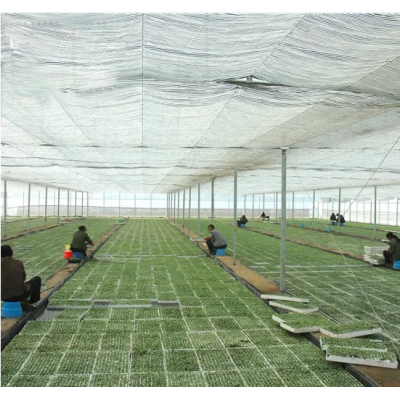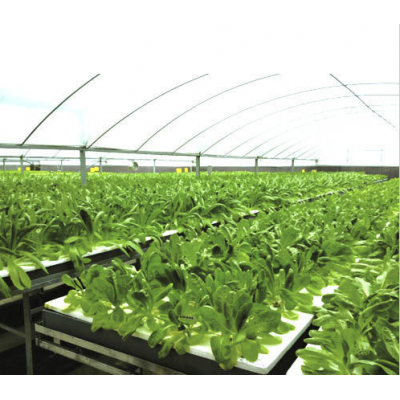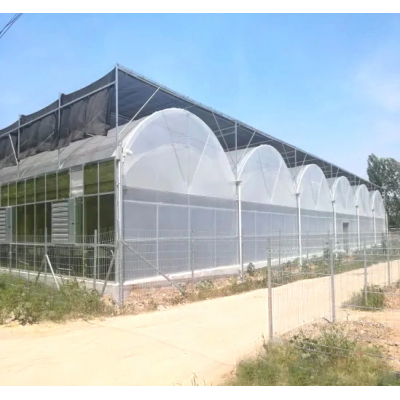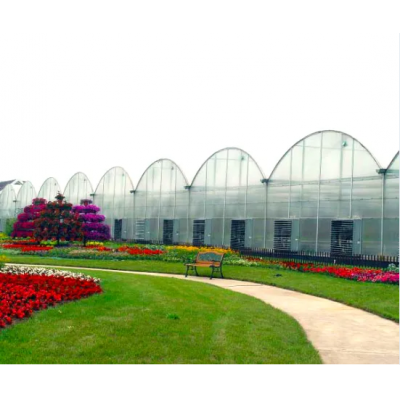
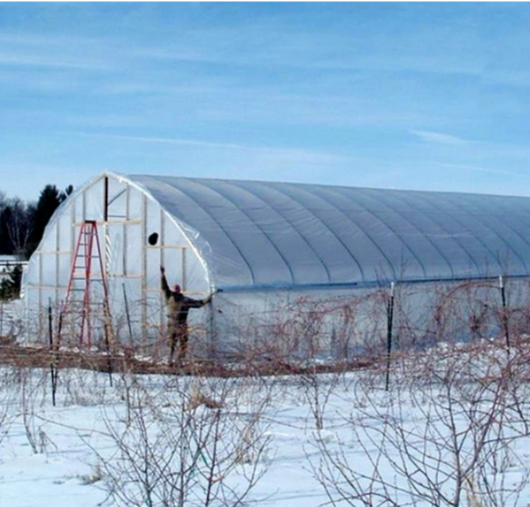
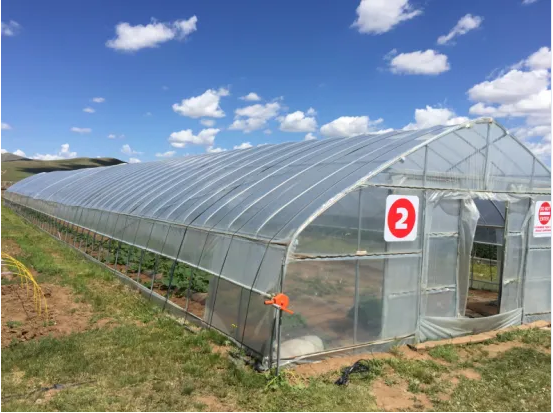

A 10-meter span plastic film greenhouse built on hot-dip galvanized steel pipe, with 6.4/8/9.6/10 m spans and 4.3-6.5 m ridge height available. We ship this commercial film greenhouse to vegetable growers who need wide open floors, strong wind and snow resistance, and a structure that outlasts cheap quotes. Cover options are 0.15 mm or 0.12 mm UV-stabilized film, single or double layer, fixed with aluminum clips. Optional cooling, heating, irrigation, ventilation and shading systems can be added before delivery. Tell us your field size and crop list; we design the layout and send a quote.
Most growers who buy a 10-meter film greenhouse once regret one thing: the frame. A cheap quote usually means thin zinc plating, welded joints, or undersized pipe, and any one of those fails within a few seasons. This greenhouse is built the way we'd build one for ourselves, hot-dip galvanized steel pipe throughout, spans from 6.4 to 10 meters, ridge height from 4.3 to 6.5 meters, and a UV-stabilized film cover of 0.15 mm or 0.12 mm. It is a single or double layer polyethylene structure held down by aluminum clips. The result is a large commercial film greenhouse that keeps its shape under wind load, snow load, and years of UV exposure.
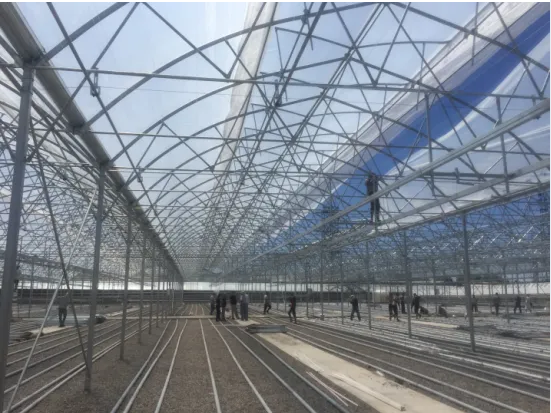
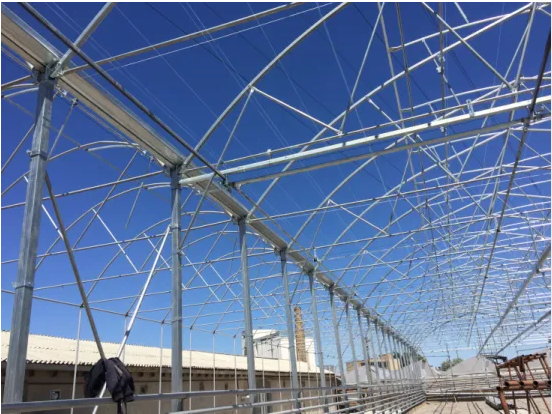
1. Hot-dip galvanized steel frame, bolted not welded
The entire frame uses hot-dip galvanized steel pipe, and joints are bolted rather than welded. Here's why the difference matters: welding burns off the zinc layer right at every connection, and that's exactly where rust starts. We saw this with a customer in Thailand who bought a welded frame, had rust at the welds within two years, then switched to a bolted structure and it has stayed sound since. On coastal sites, frames with zinc plating below 180 g/m2 start showing pitting at clamp points in three to four years; this frame's plating is specified for long service life in high-humidity export markets.
2. Wide spans up to 10 meters
Span options are 6.4 m, 8 m, 9.6 m and 10 m. The benefit is simple: fewer internal posts means more usable growing floor. Every extra row of posts across a 5-hectare block takes up space and complicates machinery turning. If you run tractors or rolling benches inside, go with the widest span your budget allows.
3. UV-stabilized cover film, 0.15 mm or 0.12 mm
The cover is a standard clear polyethylene greenhouse film, single or double layer, held by aluminum clips on a grooved channel frame. In strong UV regions, ordinary PE film lasts about half as long as it does in temperate zones, which is why we use UV-stabilized film as standard. A customer in Xinjiang has run 150-micron UV film under intense sun for years and its light transmission is still good. Don't assume thicker is better beyond 180 microns; above that you start losing light before you gain much strength. 150 microns is the practical balance point for most crops.
4. Arch roof design for wind and snow loads
The arch roof sheds snow and wind pressure instead of fighting them. A dense arch spacing is what carried a customer's greenhouses through a Texas snowstorm while thinner-spaced, thin-zinc structures in the same region collapsed. This greenhouse is rated to 0.35 kN/m2 wind load as standard, and we can raise the specification for snow-load regions on request.
5. Manual or electric side ventilation
Ventilation comes as manual crank or electric motor options. Tropical growers should treat this as essential, not optional: when humidity stays above 92% before 9 a.m., a greenhouse without side ventilation can break out downy mildew within three days. Electric drive makes daily climate control realistic on large houses.
6. Aluminum clips and grooved channel frame
Film is locked into a grooved channel frame with aluminum clips. Compared with cheap wire-and-clamp systems, this holds the film through wind gusts and makes re-covering a one-person job on smaller spans. It also keeps the structure easy to take down, move to a new field, and re-erect, which is harder to say for a welded frame.
This commercial film greenhouse fits vegetable, fruit, flower and seed nursery operations. Common crops include tomato, bell pepper, cucumber, strawberry and leafy greens, with layout adapted to your row spacing and irrigation type. It works across climate zones, from tropical high-humidity sites that need strong ventilation, to cold-winter regions that run double-layer film and add a heating system. We also supply the optional cooling and heating, drip irrigation, fertilization, ventilation and shading systems, plus benches, so the structure arrives as a complete package rather than a bare shell.
When you compare quotes for a 10-meter film greenhouse, look at the lifetime cost, not the first invoice. A bolted galvanized frame can be dismantled, moved to a new plot and re-erected; a welded frame, once dismantled, is scrap steel. Our factory has shipped greenhouse projects to over 27 countries, with annual exports above USD 8 million, and our engineer team can travel to your site to supervise installation if the project requires it. Every arch pipe end carries a stamped BZ mark, which doubles as our anti-counterfeit sign, so even years later you can order the exact replacement part and know it came from our plant. Labor costs in Europe and North America run two to three times the material cost, so installation speed matters; every part here is pre-drilled, pre-cut and numbered for straightforward assembly. If you need full tender documentation or certification packs, reach out with your project requirements and we will provide the compliance documents within 48 hours.
1. Can I get a span between your standard sizes?
Yes. Spans of 6.4 m, 8 m, 9.6 m and 10 m are standard, and custom widths are quoted per project. Send your field dimensions and we will confirm the layout and steel spec within 24 hours.
2. Which film should I choose, 0.15 mm or 0.12 mm?
It depends on your climate. In strong UV or high wind regions, 0.15 mm gives more durability; in mild temperate zones, 0.12 mm keeps costs lower while still passing light well. We can recommend based on your location and crop.
3. Do you ship the whole greenhouse as a kit?
Yes. Each package contains the metal structure, covering system and installation accessories. Systems like cooling, heating, irrigation, ventilation, fertilization and shading are added on request before shipment.
4. How long does installation take, and do you send engineers?
A team of farm workers can assemble most spans with the numbered bolts and step-by-step drawings. For large projects, our engineers can travel abroad to supervise the installation; that is arranged at the contract stage.
Mark Wu, Co-founder & Lead Engineer, Ziyang Bozong Greenhouse. 17 years designing commercial greenhouses for growers in 27 countries.
Have you used this greenhouse? Leave a review below to share your crop results and experience with other growers.