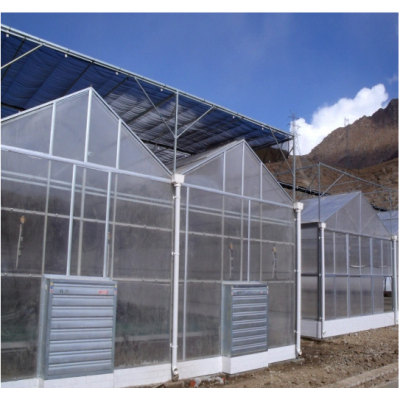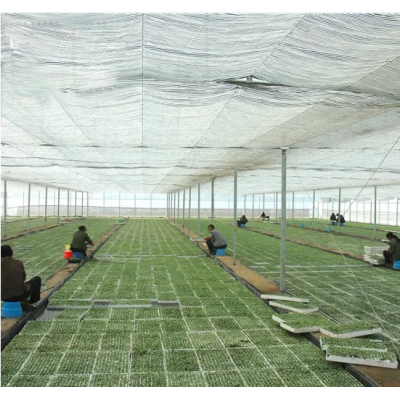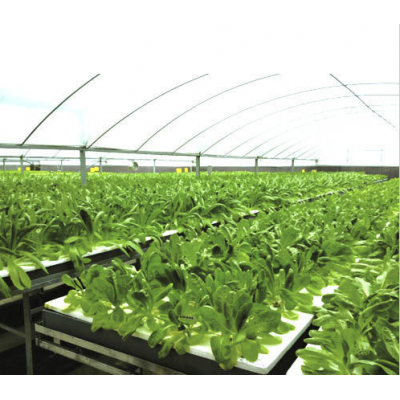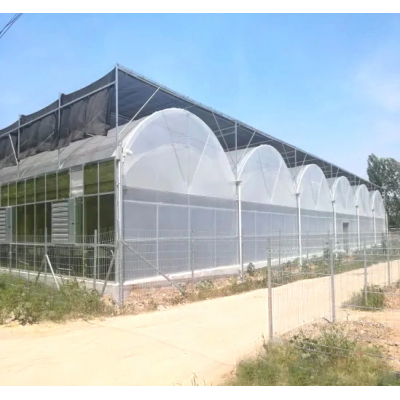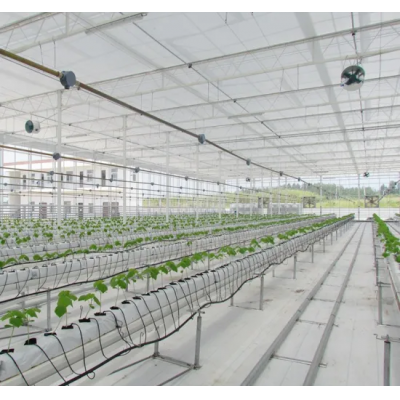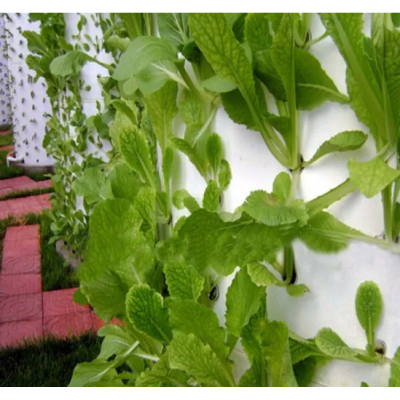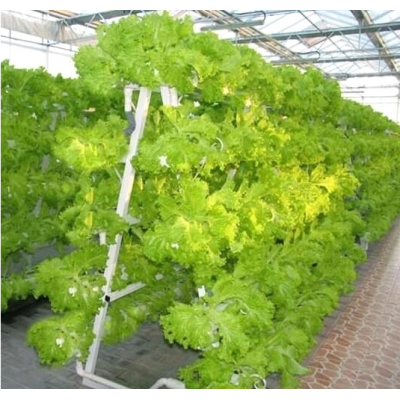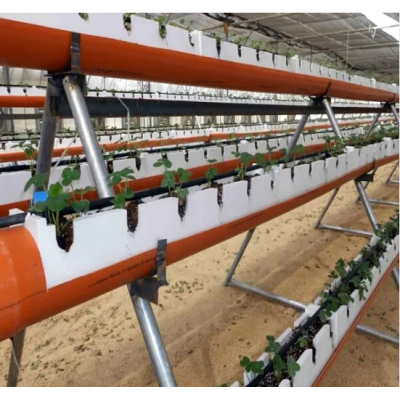
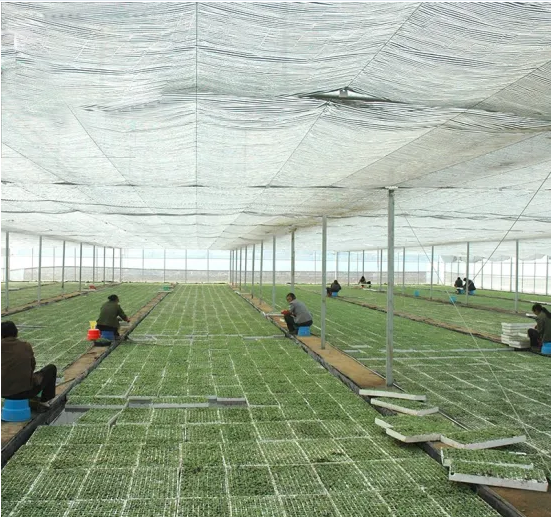
Seed trays are the first home for every seedling, and the ones we ship are built to survive more than one season. These plastic seed trays sit inside greenhouse benches or hydroponics gutters, hold a uniform layer of growing medium, and let excess water escape through the drainage holes instead of pooling around young roots. We supply seed trays in standard nursery sizes and can adjust cell count and tray dimensions to match your seeding line or bench layout. Orders are packed flat for container loading, which keeps freight cost predictable. If you run a commercial nursery or a hydroponics lettuce farm, tell us your tray width and cell depth and we will confirm the matching spec before you order.

Every seedling starts in something, and most nurseries choose plastic seed trays because they are cheap, light and easy to move. The problem is that cheap trays bend, crack in the sun and drain unevenly, so young roots sit in water and rot before they reach transplant size. Our seed trays are made for repeated seasonal use, with drainage holes spaced evenly across the base and a rim designed to hold its shape when the tray is full of wet growing medium.
These plastic seed trays work on greenhouse benches, in hydroponics gutters and on simple wire shelving. They stack flat when empty, which matters when you pack a full order into a container, and they take the same handling a commercial nursery gives them - lifting, washing and reusing across multiple planting cycles.


Even drainage across the base - Drainage holes are distributed evenly rather than clustered at one corner, so every cell drains at a similar rate. In our experience with lettuce nurseries, uneven drainage is the main cause of patchy germination trays.
Stackable flat design - Empty trays nest for storage and shipping. A standard 20-foot container holds more flat-nested trays than rigid pots, which keeps your landed cost lower.
Stiff rim that keeps its shape - The rim is reinforced so the tray does not sag when lifted full of medium. This is the difference between a tray that survives ten cycles and one that splits in the first season.
Standard nursery sizes with custom options - We work with common bench and gutter widths. If your seeding line runs a specific width, we can adjust the tray dimension to fit it.
Compatible with bench and hydroponics layouts - These trays sit inside the growing channels used by hydroponics system setups and on conventional greenhouse benches, so the same tray follows seedlings from germination to transplant.

Seed trays earn their keep wherever seedlings are started in volume. The seeding bed is the classic home for them, but the same tray moves into a greenhouse hydroponics line for transplant propagation.

One factory for the whole seedling room - Trays, benches, irrigation and greenhouse structures ship from the same supplier, so you match the tray to the bench without juggling five vendors. If you also run a dripping irrigation line, we can confirm the tray drainage works with your emitter spacing.
Custom sizing without minimum-order drama - We adjust tray width and cell count for your bench layout. Most dimensional changes do not change the unit price.
Engineers who have built nurseries, not just sold trays - Our team has supervised greenhouse and nursery installations across Asia, Africa and South America, so we can flag fit problems before you order rather than after you unpack.
Shipping that respects your planting window - Seeding schedules do not move, so we confirm the loading date in writing and schedule production around your deadline.
What we will not over-promise - We tell you honestly what material grade and wall thickness your order uses, and how it behaves in UV-heavy climates, before you commit. Standards and climate guidance published by ISHS and trade reporting from Produce Grower are useful cross-checks for nursery practice.
Q: What is the lifespan of different types of greenhouses?
A: Up to 3-5 years for film, 20+ years for glass and polycarbonate greenhouses. Film covers require replacement every 3-5 years, while the galvanized steel frame lasts over 20 years. Glass and PC panels offer longer service life with minimal maintenance, making them ideal for permanent installations. Our greenhouse frames use hot-dip galvanized steel pipes with a double-sided zinc coating of 200-275 g/m², providing uniform, dense, and strongly adherent protection specifically engineered for high-humidity greenhouse environments and long-term corrosion resistance.
Q: How long does it take to install a commercial greenhouse?
A: Installation typically takes 2-4 weeks depending on project size and complexity. Standard multi-span greenhouses can be erected in 10-20 working days by our experienced technical team at Ziyang Bozong. On-site assembly time varies based on local conditions and project scale, but we provide detailed installation manuals and remote guidance to streamline the process.
Q: Can you customize greenhouse specifications for my farm?
A: Yes, we offer full customization including dimensions, span width, height, covering materials, and ventilation systems. Simply share your crop type, local climate conditions, and growing area requirements, and our engineering team at Ziyang Bozong will design a tailored solution that optimizes your growing environment and maximizes ROI.
Q: What is your warranty policy for greenhouses?
A: Our galvanized steel frame comes with a 5-year warranty against corrosion and structural defects. Film covers include a 3-5 year UV warranty depending on the grade selected, while glass and PC panels are covered by manufacturer warranties. Ziyang Bozong provides technical support and replacement parts throughout the lifespan of your greenhouse.
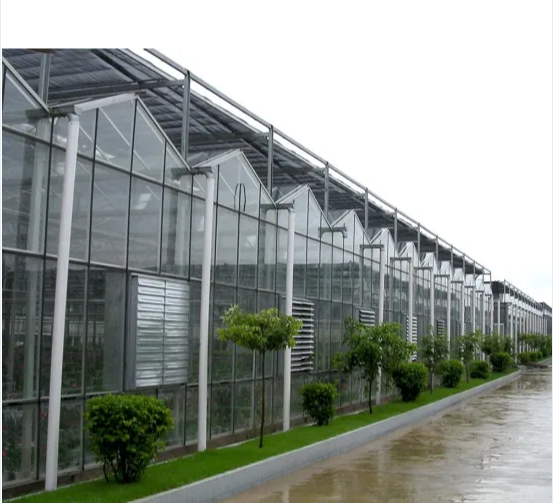
Q: What is the advantage of a multi-span greenhouse over multiple single-span tunnels for large-scale commercial production?
A: The primary advantage is land utilization efficiency. Multi-span greenhouses eliminate the gaps between individual tunnels—typically 1-2 meters per gap depending on drainage and access requirements—which can represent 10-15% of total land area in large single-span installations. This additional growing area translates directly to higher production capacity within the same land footprint. Beyond land savings, the continuous interior space simplifies equipment movement, reduces travel time for workers and machinery, enables more efficient irrigation system layout, and creates uniform growing conditions across the entire structure—supporting consistent crop quality and simplified management protocols.
What sizes do you supply? - We supply standard nursery tray sizes and can adjust width and cell count to your bench or seeding line. Send your bench width and we will confirm the exact spec.
Can these trays be reused? - Yes, they are designed for repeated seasonal use and can be washed between cycles. How many cycles you get depends on the material grade, which we confirm at quotation.
Do the drainage holes suit hydroponics channels? - The trays sit inside standard gutter and channel widths used by hydroponics systems. Tell us your channel width and we will match the tray dimension.
How are they packed for export? - Trays stack flat, which keeps freight volume low. We confirm the packing list and loading date in writing before shipment.
Mark Wu, Co-founder & Lead Engineer at Ziyang Bozong Greenhouse. I have spent over a decade designing greenhouse structures and nursery equipment for export markets, and I have personally supervised installations across Asia, Africa and South America. The drainage and rim design on these seed trays comes from what nurseries reported back about cheap trays failing, not from a catalogue.
Have you started seedlings on Ziyang Bozong seed trays? Leave a review and share your germination rates and how many cycles your trays lasted - it helps other growers decide.