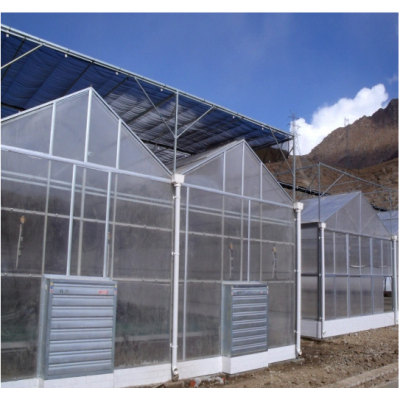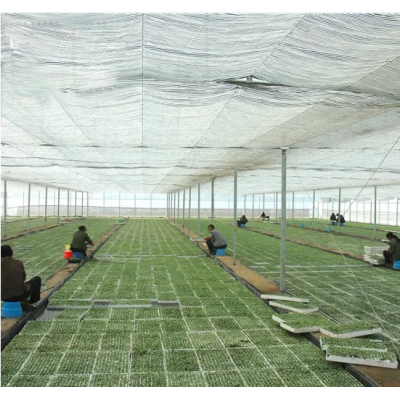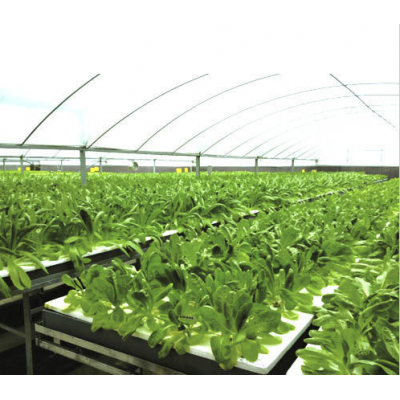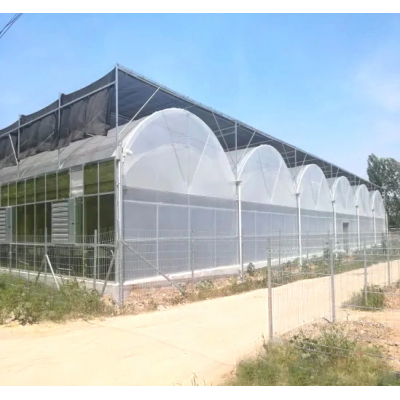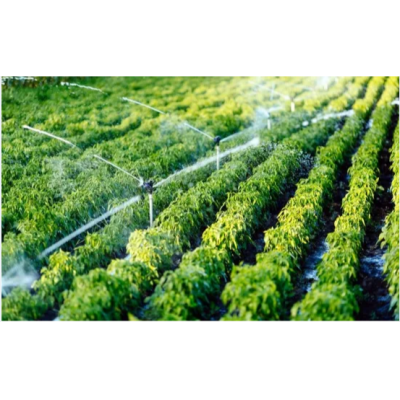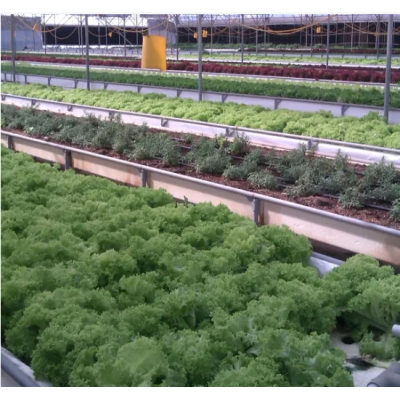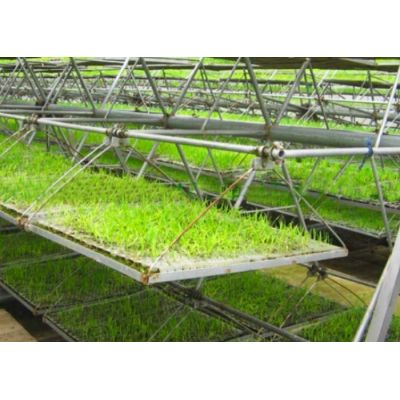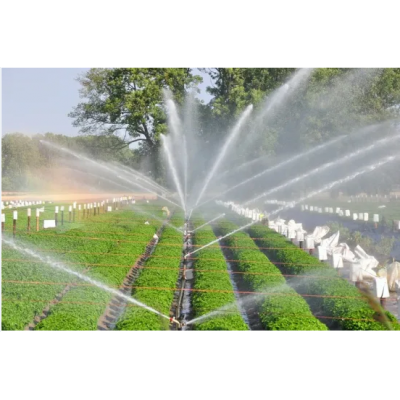
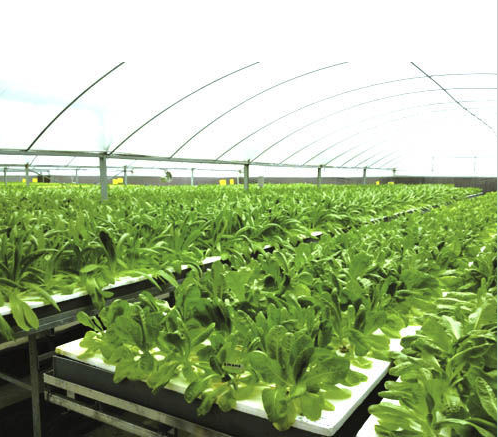
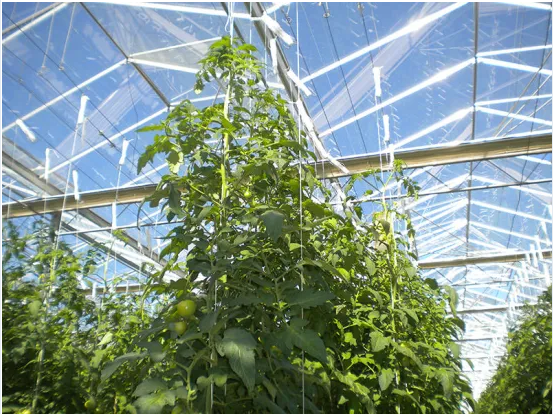
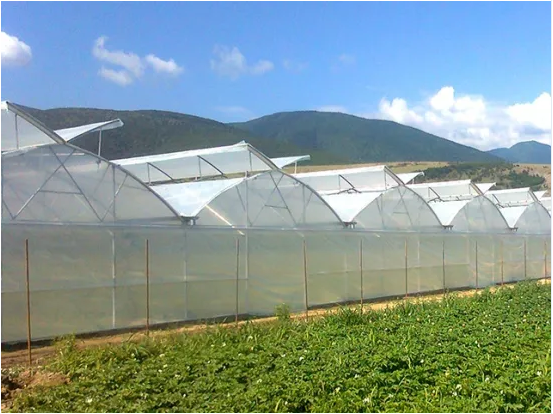
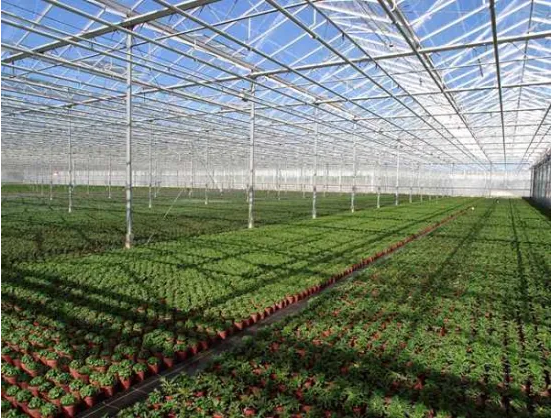
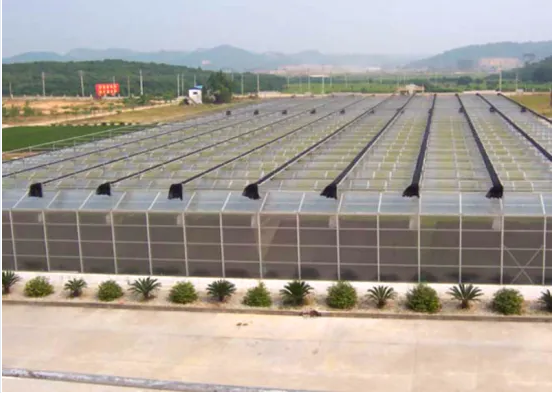
A drip irrigation system is the cheapest way to keep a greenhouse crop watered, and the one we build starts with PE pipe rated for repeated seasonal use. It delivers water directly to the root zone, which cuts waste compared with overhead watering and matters most in arid regions where every cubic meter of water counts. Our PE pipe kit is flexible, tear-resistant and self-adhesive stable, with diameters from 20mm to 30mm and custom length and width options. We supply the full drip irrigation system for hydroponic greenhouse layouts, from feed line to emitter. If you run vegetables, herbs or seedlings under cover, tell us your row length and bed width and we will confirm the matching kit before you order.

In a greenhouse, how water reaches the roots decides how much of it the crop actually uses. Overhead watering wets leaves, fuels disease and loses water to evaporation, while a drip irrigation system puts water at the root zone and lets the plant take what it needs. For growers in arid and semi-arid regions, that difference is the whole margin.
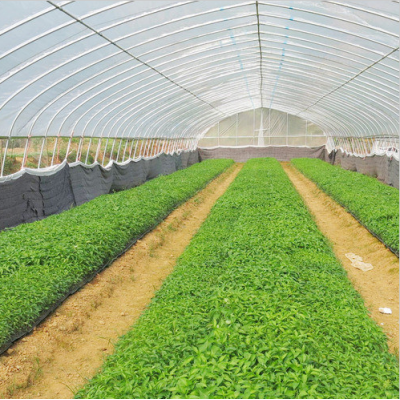
This drip irrigation system is built around PE pipe that is flexible enough to follow long greenhouse rows and tough enough to survive repeated seasonal use. It works with hydroponic greenhouse layouts, conventional soil beds and raised troughs, and the kit can be sized to your row length and bed width.


Water delivered to the root zone - Emitters release water directly beside the root system, cutting evaporation and disease pressure compared with overhead watering. In our installations in dry regions, customers typically report visibly lower water bills in the first season.
PE pipe with high transparency - You can see water flow inside the line, which makes blockages and air pockets easy to spot before they starve a plant.
Tear-resistant and anti-puncture film - The pipe resists puncture, tearing and fogging, and stays dimensionally stable under UV-heavy greenhouse conditions.
Self-adhesive stable joints - Fittings hold reliably without constant re-tightening, which cuts the maintenance rounds a large greenhouse demands every week.
Custom diameter and length - Diameters run from 20mm to 30mm, with width and length customized to your layout, so you do not pay for excess pipe or waste rows on undersized runs.
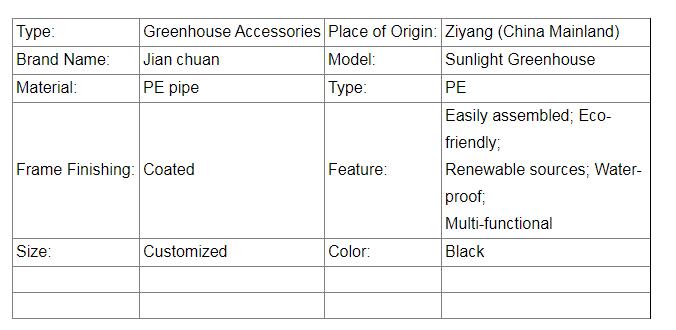

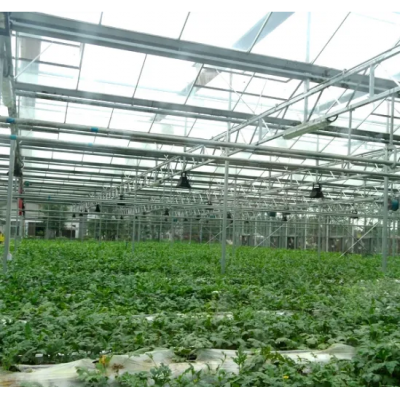
This drip irrigation system fits the irrigation loops of modern greenhouse production, including the hydroponics system for greenhouse setups and soil-based vegetable houses.

One supplier for the whole irrigation loop - Pipe, emitters and fittings ship together with the hydroponics drip irrigation system hardware, so flow rates match from feed line to emitter instead of fighting components from five vendors.
Sized to your rows, not a fixed kit - We confirm length, diameter and emitter spacing against your bed layout before you order, so the kit arrives ready to install.
Engineers who have installed in dry regions - Our team has supervised greenhouse irrigation installations across Asia, Africa and South America, and we flag pressure and filtration issues before shipment rather than after harvest losses.
Delivery planned around your planting window - Irrigation lines must be in the ground before the first watering. We confirm the loading date in writing and schedule production around it.
Honest about performance - We state material grade and wall thickness at quotation and do not promise results that depend on your water quality. Irrigation research published by USDA and reporting from Greenhouse Grower are useful references for drip scheduling.
Q: What is the lifespan of different types of greenhouses?
A: Up to 3-5 years for film, 20+ years for glass and polycarbonate greenhouses. Film covers require replacement every 3-5 years, while the galvanized steel frame lasts over 20 years. Glass and PC panels offer longer service life with minimal maintenance, making them ideal for permanent installations. Our greenhouse frames use hot-dip galvanized steel pipes with a double-sided zinc coating of 200-275 g/m², providing uniform, dense, and strongly adherent protection specifically engineered for high-humidity greenhouse environments and long-term corrosion resistance.
Q: How long does it take to install a commercial greenhouse?
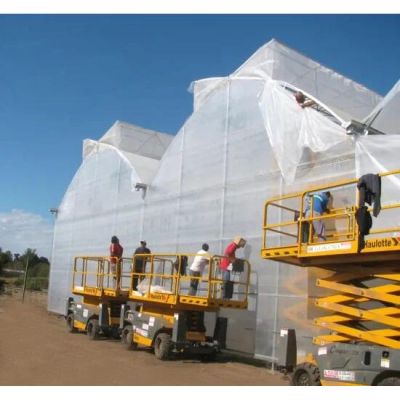
A: Installation typically takes 2-4 weeks depending on project size and complexity. Standard multi-span greenhouses can be erected in 10-20 working days by our experienced technical team at Ziyang Bozong. On-site assembly time varies based on local conditions and project scale, but we provide detailed installation manuals and remote guidance to streamline the process.
Q: Can you customize greenhouse specifications for my farm?
A: Yes, we offer full customization including dimensions, span width, height, covering materials, and ventilation systems. Simply share your crop type, local climate conditions, and growing area requirements, and our engineering team at Ziyang Bozong will design a tailored solution that optimizes your growing environment and maximizes ROI.
Q: What is your warranty policy for greenhouses?
A: Our galvanized steel frame comes with a 5-year warranty against corrosion and structural defects. Film covers include a 3-5 year UV warranty depending on the grade selected, while glass and PC panels are covered by manufacturer warranties. Ziyang Bozong provides technical support and replacement parts throughout the lifespan of your greenhouse.
Q: What is the advantage of a multi-span greenhouse over multiple single-span tunnels for large-scale commercial production?
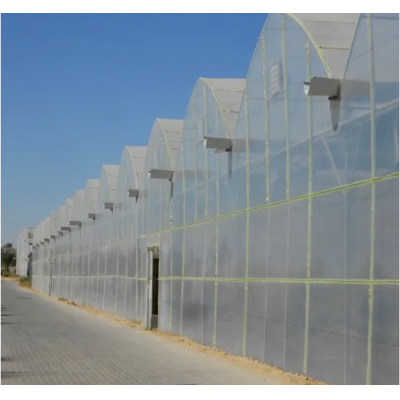
A: The primary advantage is land utilization efficiency. Multi-span greenhouses eliminate the gaps between individual tunnels—typically 1-2 meters per gap depending on drainage and access requirements—which can represent 10-15% of total land area in large single-span installations. This additional growing area translates directly to higher production capacity within the same land footprint. Beyond land savings, the continuous interior space simplifies equipment movement, reduces travel time for workers and machinery, enables more efficient irrigation system layout, and creates uniform growing conditions across the entire structure—supporting consistent crop quality and simplified management protocols.
What pipe diameters do you supply? - Our PE pipe runs from 20mm to 30mm diameter, with custom lengths and widths. Tell us your row length and bed width and we will confirm the kit spec.
Does this kit work for hydroponics? - Yes, the drip system is compatible with hydroponic greenhouse channels and NFT-style layouts, and pairs with our drip irrigation equipment range. Let us know your channel spacing so we match emitter spacing to it.
How much water does drip irrigation save? - Compared with overhead watering, drip reduces waste substantially because water goes to the root zone. Exact savings depend on climate and crop, which we help you estimate at quotation.
How is the pipe packed for export? - Pipe and fittings are packed in rolls and cartons to keep container volume low. We confirm the packing list and loading date in writing.
Mark Wu, Co-founder & Lead Engineer at Ziyang Bozong Greenhouse. I have spent over a decade designing greenhouse structures and irrigation systems for export, and I have personally supervised drip installations across Asia, Africa and South America. The sizing options on this kit come from what growers reported about fixed-size kits wasting pipe, not from a catalogue.
Have you run Ziyang Bozong drip irrigation in your greenhouse? Leave a review and share your water savings and how the pipe held up over seasons - it helps other growers decide.