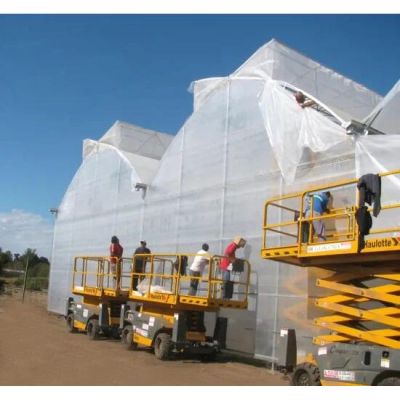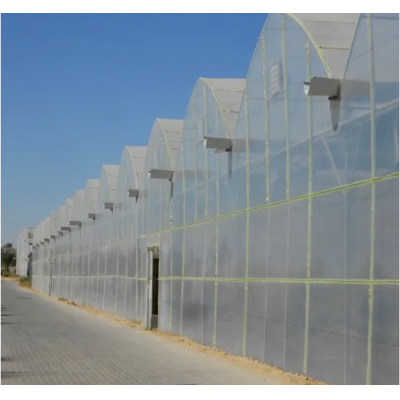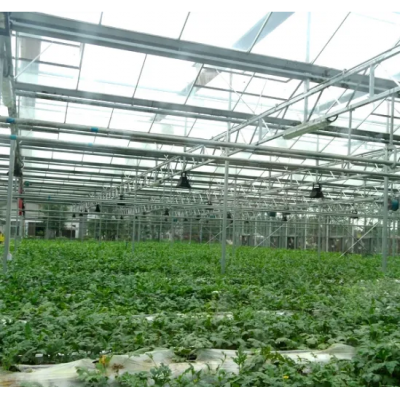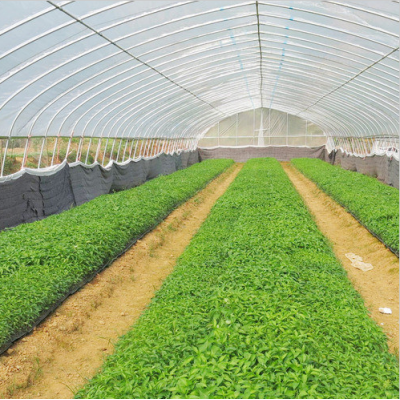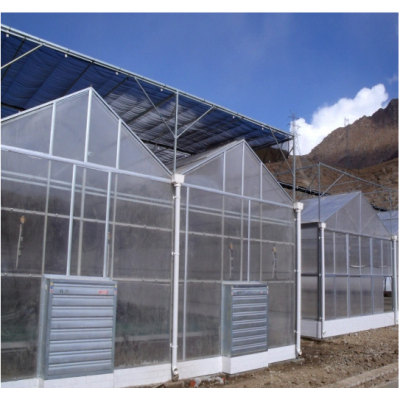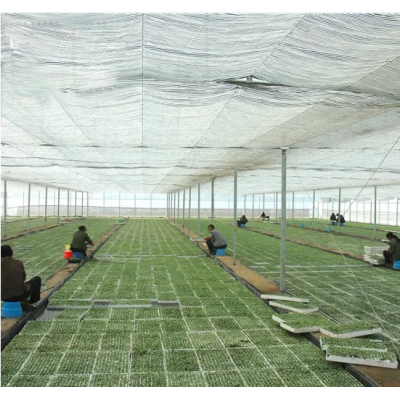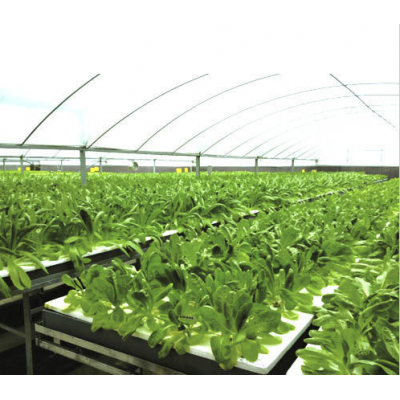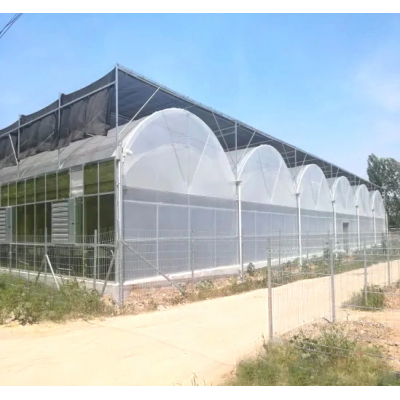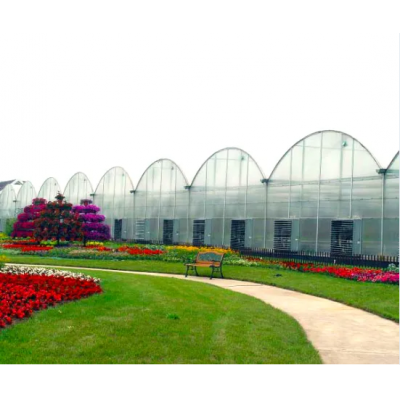


Extreme snow, heavy rain and sustained high humidity push ordinary greenhouses to their breaking point, often failing at joints and weak points. This heavy-weather single-span film greenhouse uses a 200-275 g/m² hot-dip galvanized steel frame with configurable arch spacing to match local load conditions. The 150-micron anti-drip UV film controls condensation and fungal pressure in wet climates. Optional roll-up side ventilation handles temperature spikes. Built for farms in snow-prone, high-rainfall and coastal regions where structural reliability directly defines crop security.

Extreme snow, heavy rain and sustained high humidity push ordinary greenhouses to their breaking point, often failing at joints and weak points. That’s the core challenge this heavy-weather single-span film greenhouse is engineered to solve. It is built on a hot-dip galvanized steel frame with a 200-275 g/m² zinc coating, aligned with EN ISO 1461 standards for corrosion resistance in aggressive agricultural environments. Covered with 150-micron UV-stabilized anti-drip PE film, it is specified for operations located in snow-prone, high-rainfall and coastal high-humidity regions.
Span widths range from 6 to 9 meters, with arch spacing tuned to local climate conditions. For heavy snow regions, narrower spacing and steeper roof pitches distribute load more effectively. For high-wind zones, closer arch support reduces unsupported film area. Every connection uses bolted fastening with no on-site welding, preserving the full factory zinc coating at every joint — the most common point of premature structural failure in harsh climates.
The specification matters because in extreme weather, the difference between a surviving greenhouse and a total loss often comes down to a few millimeters of zinc and a few hundred millimeters of arch spacing.


200-275 g/m² hot-dip galvanized steel frame
Based on the engineering principle, this zinc coating weight range provides uniform, dense protection across all steel surfaces. In coastal or persistently humid areas, thinner zinc coatings can develop rust at clamping points within 3-4 years as moisture becomes trapped under hardware. At 200-275 g/m², the structure maintains corrosion protection through repeated cycles of rain, snow and humidity. Bolted joints eliminate the weld burn-through that creates unprotected corrosion starting points on field-welded frames.
Configurable arch spacing (6-9M span)
On sites where heavy snow and ice accumulation are a primary concern, this becomes critical: Narrower arch spacing places more structural steel under each square meter of roof load, and steeper roof geometry allows snow to slide off before it builds to critical weight. In high-wind regions, the same adjustment reduces flutter and stress on film and fasteners. There is no universal optimal specification — it depends on local historical weather patterns. That is why each order is configured to match the project’s specific location.
150-micron UV-resistant anti-drip PE film
The reason this specification matters: In high-rainfall, high-humidity climates, untreated film forms condensation droplets that act like magnifying lenses and create localized fungal hotspots on leaf surfaces. Anti-drip treatment spreads condensation into a continuous thin sheet that runs down the sidewalls instead of dripping onto crop canopies. The 150-micron thickness balances mechanical tear resistance with light transmission, a widely accepted benchmark for commercial agricultural film in variable weather.
Bolted modular assembly, zero on-site welding
What the spec sheet doesn't tell you: Welded joints are the single most common failure point in greenhouse frames exposed to cyclic weather. Every weld burns through the zinc layer, leaving bare steel exposed to moisture. This fully bolted design retains 100% of the factory galvanic protection at every connection. It also allows individual components to be replaced if damaged, without cutting and re-welding sections of the frame.
Optional roll-up side ventilation system
In real-world growing conditions, temperature and humidity control directly impact disease pressure and crop yield. The optional film rolling side ventilation system allows passive cooling and air exchange, reducing heat buildup during sunny periods and flushing excess humidity after rainfall. It is a low-energy cooling solution well suited for remote sites and variable climate zones.
Tomato and pepper farms in snow-prone North American and Northern European regions rely on this configuration for extended-season production. The load-tuned frame stands up to consistent winter snow cover that would collapse lighter tunnel designs, while the anti-drip film suppresses fungal outbreaks during cool, damp spring months. In high-rainfall Southeast Asian growing zones, the structure supports year-round strawberry and leafy green production by shielding crops from heavy monsoon rains and reducing overhead drip-related disease. Coastal flower nurseries use the corrosion-resistant frame to withstand salt air and persistent humidity, maintaining structural integrity far longer than standard painted or lightly galvanized alternatives. In high-altitude African growing regions, the UV-stabilized film and robust frame handle intense sunlight and sudden storm events for high-value cash crop production.

A greenhouse is a 20-year decision, not a 2-year one. In regions with harsh weather, that timeline becomes even more important — because a structural failure doesn’t just cost you a frame, it costs you an entire growing cycle and the revenue that comes with it.
First, the material specification is built for long-term field performance. The 200-275 g/m² hot-dip galvanized coating meets European agricultural corrosion standards, and the bolted joint design eliminates the most common failure path. Over a 20-year service life, this means fewer structural repairs, less unplanned downtime, and lower long-term maintenance labor compared to lighter welded or painted steel alternatives.
Second, climate-specific configuration removes guesswork. You don’t get a one-size-fits-all catalog spec. Arch spacing, roof pitch and ventilation options are matched to your location’s typical weather patterns. This avoids the common pitfall of buying an underspecified frame that fails in its first severe storm, or overspending on heavy-gauge steel you don’t actually need for a sheltered site.
Third, verified quality controls back every shipment. Ziyang Bozong operates under ISO 9001 quality management systems, and our structural designs carry CE certification. This isn’t marketing documentation — it means material traceability, production consistency and compliance with recognized safety and performance benchmarks. When you’re investing in infrastructure that must withstand decades of weather, that traceability matters.
Fourth, long-term support extends past delivery. Replacement components are standardized and available for the full lifespan of the structure. If a section is damaged in a storm, you replace the affected parts, not the entire frame. Technical guidance is available for installation, maintenance and future expansion, so your structure adapts as your operation grows.

Q: What is the lifespan of different types of greenhouses?
A: Up to 3-5 years for film, 20+ years for glass and polycarbonate greenhouses. Film covers require replacement every 3-5 years, while the galvanized steel frame lasts over 20 years. Glass and PC panels offer longer service life with minimal maintenance, making them ideal for permanent installations. Our greenhouse frames use hot-dip galvanized steel pipes with a double-sided zinc coating of 200-275 g/m², providing uniform, dense, and strongly adherent protection specifically engineered for high-humidity greenhouse environments and long-term corrosion resistance.
Q: How long does it take to install a commercial greenhouse?
A: Installation typically takes 2-4 weeks depending on project size and complexity. Standard multi-span greenhouses can be erected in 10-20 working days by our experienced technical team at Ziyang Bozong. On-site assembly time varies based on local conditions and project scale, but we provide detailed installation manuals and remote guidance to streamline the process.
Q: Can you customize greenhouse specifications for my farm?
A: Yes, we offer full customization including dimensions, span width, height, covering materials, and ventilation systems. Simply share your crop type, local climate conditions, and growing area requirements, and our engineering team at Ziyang Bozong will design a tailored solution that optimizes your growing environment and maximizes ROI.
Q: What is your warranty policy for greenhouses?
A: Our galvanized steel frame comes with a 5-year warranty against corrosion and structural defects. Film covers include a 3-5 year UV warranty depending on the grade selected, while glass and PC panels are covered by manufacturer warranties. Ziyang Bozong provides technical support and replacement parts throughout the lifespan of your greenhouse.
Q: What is the advantage of a multi-span greenhouse over multiple single-span tunnels for large-scale commercial production?
A: The primary advantage is land utilization efficiency. Multi-span greenhouses eliminate the gaps between individual tunnels—typically 1-2 meters per gap depending on drainage and access requirements—which can represent 10-15% of total land area in large single-span installations. This additional growing area translates directly to higher production capacity within the same land footprint. Beyond land savings, the continuous interior space simplifies equipment movement, reduces travel time for workers and machinery, enables more efficient irrigation system layout, and creates uniform growing conditions across the entire structure—supporting consistent crop quality and simplified management protocols.
Q: How should this greenhouse be configured for heavy snow regions?
A: For heavy snow zones, we recommend narrower span widths and tighter arch spacing to increase structural load capacity, paired with a steeper roof pitch to encourage snow shedding. The 200-275 g/m² galvanized frame provides the base corrosion resistance needed for repeated freeze-thaw cycles. Share your location’s typical snow conditions and we will propose a configuration matched to your environment.
Q: How well does the frame hold up in coastal high-salt, high-humidity areas?
A: The 200-275 g/m² hot-dip galvanized coating provides robust corrosion protection for coastal agricultural environments. Unlike thinner zinc coatings that can show rust at hardware points within a few years, this weight range maintains its protective layer through prolonged exposure to humidity and salt air. The bolted joint design also avoids weld-related corrosion starting points common in coastal installations.
Q: Is additional reinforcement needed for high-wind locations?
A: Wind performance is primarily managed through arch spacing and anchoring strategy. For high-wind zones, closer arch spacing reduces unsupported film area, and appropriate ground anchoring distributes wind loads across the structure. We provide site-specific anchoring recommendations based on your location’s wind conditions. All standard components are used — no custom fabrication is required.