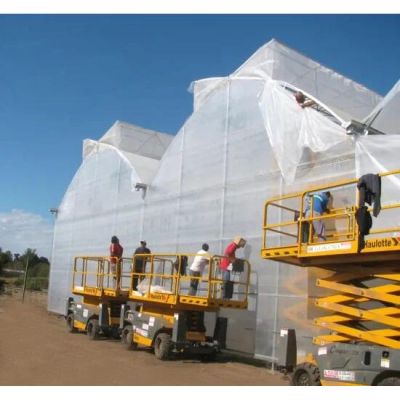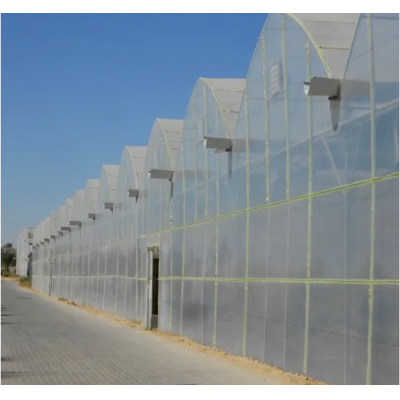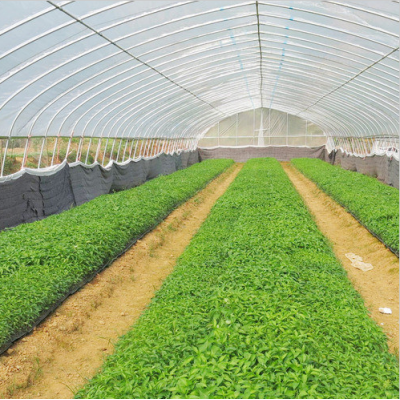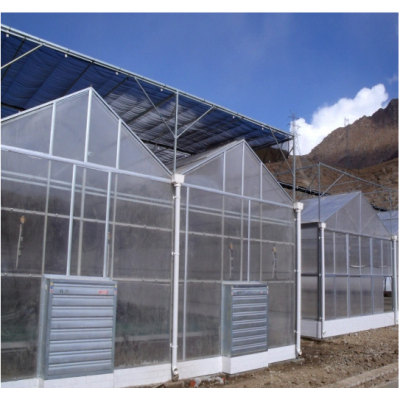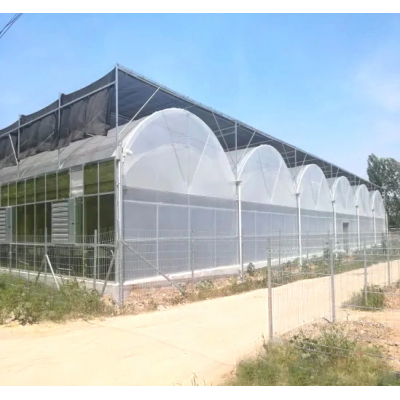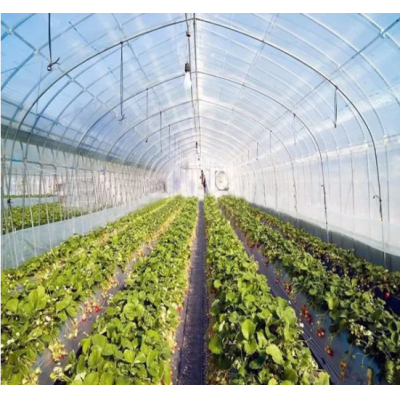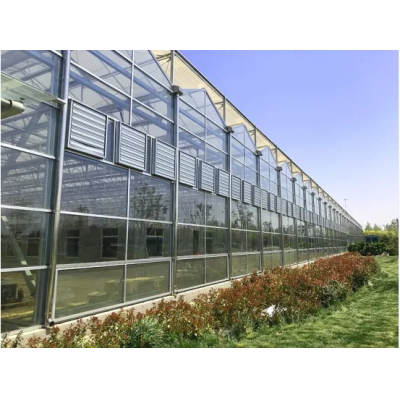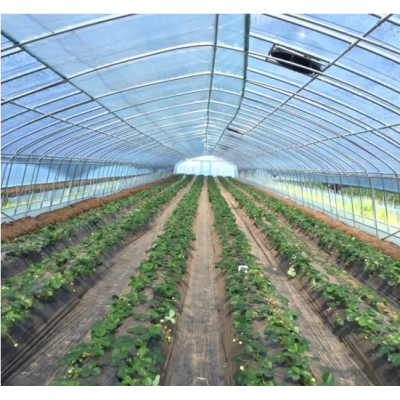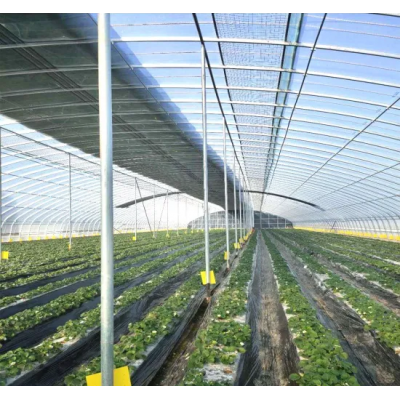
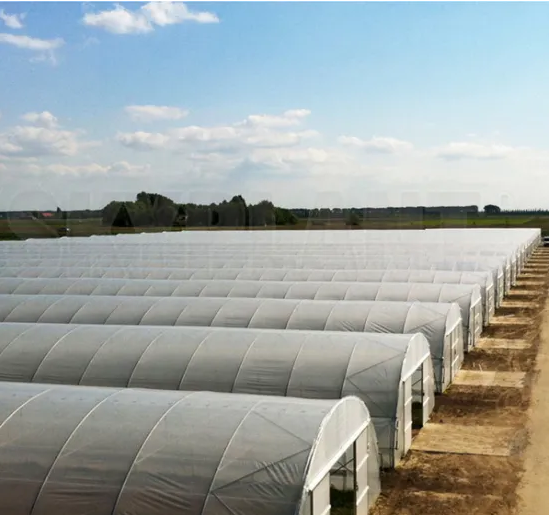
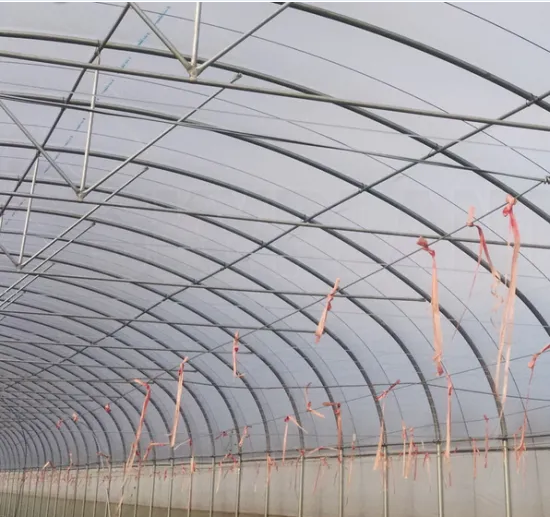
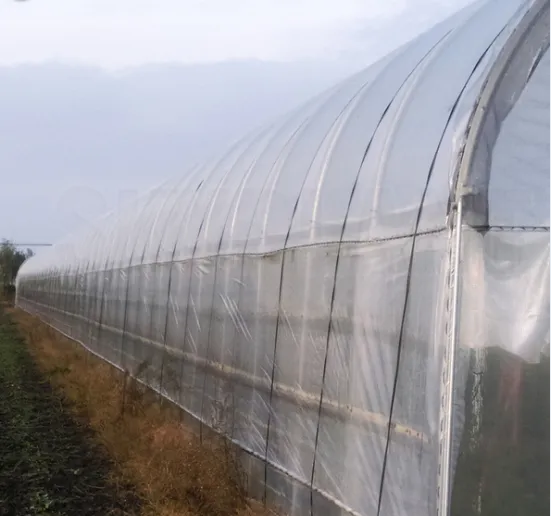
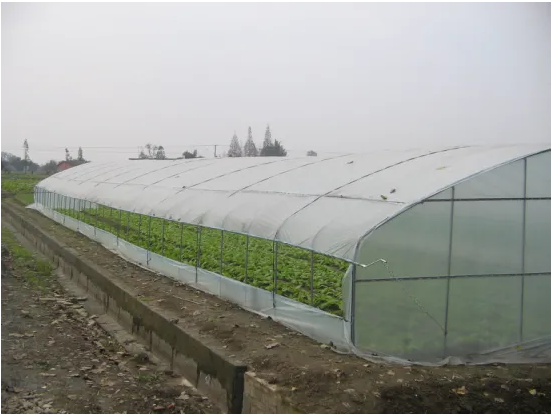
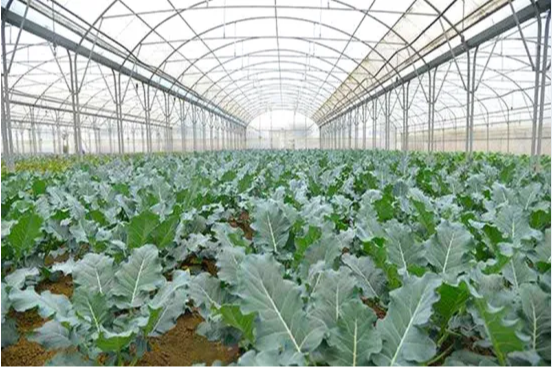
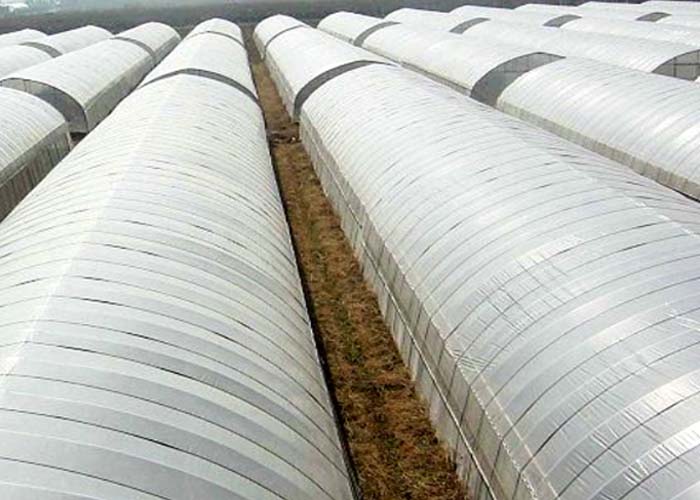
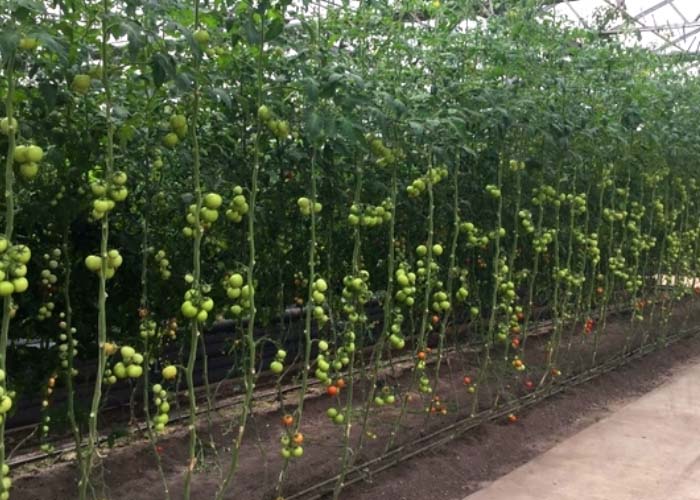
A tunnel greenhouse for vegetable growing on a hot-dip galvanized steel frame, with arch roof, spans from 5 to 10 meters and a UV-stabilized polyethylene cover of 0.08 mm to 0.15 mm. Side-wall ventilation with insect nets and roll-up curtains keeps pest pressure and heat under control. It extends the growing season for tomato, pepper, cucumber and leafy greens. Send us your field size, crop list and climate, and we will confirm a layout and quote within 24 hours.

Vegetable growers lose more to weather than to anything else, and a tunnel greenhouse is the cheapest roof they can buy. This tunnel greenhouse for vegetable growing runs on a hot-dip galvanized steel frame with arch roof, gable spans from 5 to 10 meters and a UV-stabilized polyethylene cover of 0.08 mm, 0.12 mm or 0.15 mm. Side-wall ventilation with insect nets and roll-up curtains keeps temperature and humidity manageable through the season. It extends the growing window by several weeks on both ends, which is what pushes your annual yield up. Optional drip irrigation, heating and shading systems can be fitted before delivery.


1. Hot-dip galvanized steel frame, bolted for relocation
The frame is hot-dip galvanized to stop rust at clamps and joints, and every joint is bolted and numbered. That means the whole house can come down and move with you when a field lease changes, which welded frames can't do.
2. Spans and heights that fit crop rows
Gable spans run from 5 to 10 meters with a total height of 3 or 4 meters. That leaves comfortable headroom for tomato, pepper and cucumber rows while keeping the footprint efficient for smaller vegetable plots.
3. UV-stabilized film from 0.08 mm to 0.15 mm
The polyethylene cover is UV-stabilized, which matters most in strong-sun regions where ordinary film degrades in about half the time. Choose 0.08 mm for budget seasons, 0.15 mm for exposed sites.
4. Side ventilation with insect nets
Side-wall openings come with insect nets and roll-up curtains, manual or electric. The nets are the practical answer to aphid and whitefly pressure on brassicas and leafy greens without spraying more chemicals.
5. Optional irrigation and heating systems
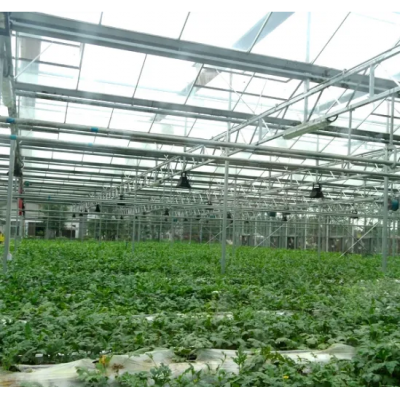
Drip irrigation, heating and shading systems can be pre-fitted before delivery, so the greenhouse arrives as a working system rather than a bare shell.
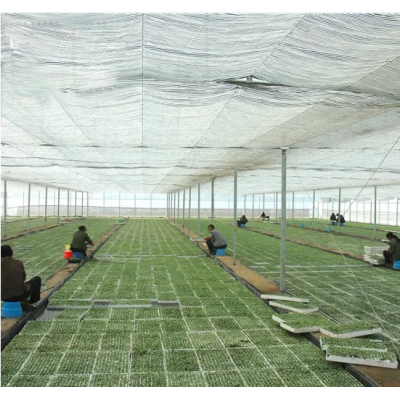
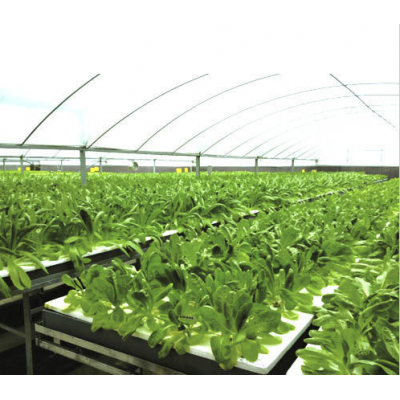
This tunnel greenhouse for vegetable growing suits tomato, bell pepper, cucumber, leafy greens and nursery seedlings. It is a standard tool for market gardeners who want earlier spring crops and a longer autumn, and it works in both temperate and warm regions with the right film and ventilation choices. For heavier production, pair it with our wider film greenhouse range, or see the tomato greenhouse and greenhouse for lettuce growing for crop-specific layouts. For crop-level growing guidance, FAO publishes open references on protected horticulture.

We have delivered greenhouse projects in 27 countries, and the details that matter show up in the field. Every arch pipe end is stamped with a BZ mark, our anti-counterfeit sign, so years later you can order the exact replacement part and know it came from our plant. The bolted frame can be dismantled and re-erected on a new plot, which is a real saving when land is rented. Our engineer team can travel to your site to supervise installation, and the package covers the metal structure, covering system and install accessories. Design choices follow the engineering principles of EN 13031-1 for commercial greenhouse structures, and industry trends are tracked through trade media such as Greenhouse Grower. Tell us your field size, crop list and local climate, and we will confirm a layout and quote within 24 hours.

Q: What is the lifespan of different types of greenhouses?
A: Up to 3-5 years for film, 20+ years for glass and polycarbonate greenhouses. Film covers require replacement every 3-5 years, while the galvanized steel frame lasts over 20 years. Glass and PC panels offer longer service life with minimal maintenance, making them ideal for permanent installations. Our greenhouse frames use hot-dip galvanized steel pipes with a double-sided zinc coating of 200-275 g/m², providing uniform, dense, and strongly adherent protection specifically engineered for high-humidity greenhouse environments and long-term corrosion resistance.
Q: How long does it take to install a commercial greenhouse?
A: Installation typically takes 2-4 weeks depending on project size and complexity. Standard multi-span greenhouses can be erected in 10-20 working days by our experienced technical team at Ziyang Bozong. On-site assembly time varies based on local conditions and project scale, but we provide detailed installation manuals and remote guidance to streamline the process.
Q: Can you customize greenhouse specifications for my farm?
A: Yes, we offer full customization including dimensions, span width, height, covering materials, and ventilation systems. Simply share your crop type, local climate conditions, and growing area requirements, and our engineering team at Ziyang Bozong will design a tailored solution that optimizes your growing environment and maximizes ROI.
Q: What is your warranty policy for greenhouses?
A: Our galvanized steel frame comes with a 5-year warranty against corrosion and structural defects. Film covers include a 3-5 year UV warranty depending on the grade selected, while glass and PC panels are covered by manufacturer warranties. Ziyang Bozong provides technical support and replacement parts throughout the lifespan of your greenhouse.
Q: What is the advantage of a multi-span greenhouse over multiple single-span tunnels for large-scale commercial production?
A: The primary advantage is land utilization efficiency. Multi-span greenhouses eliminate the gaps between individual tunnels—typically 1-2 meters per gap depending on drainage and access requirements—which can represent 10-15% of total land area in large single-span installations. This additional growing area translates directly to higher production capacity within the same land footprint. Beyond land savings, the continuous interior space simplifies equipment movement, reduces travel time for workers and machinery, enables more efficient irrigation system layout, and creates uniform growing conditions across the entire structure—supporting consistent crop quality and simplified management protocols.
1. What vegetables grow well in this tunnel greenhouse?
Tomato, pepper, cucumber, leafy greens and nursery seedlings all do well. For crop-specific setups, see our tomato greenhouse guide or the tunnel greenhouse range.
2. Which film thickness should I choose?
It depends on your climate. 0.15 mm for exposed, high-wind or strong-UV sites; 0.12 mm as a balanced standard; 0.08 mm for budget projects in mild regions.
3. Do I need a heating system?
Not always. The greenhouse alone extends the season in most temperate climates. Heating makes sense in cold regions or for high-value crops where early yield pays for the fuel.
4. Can the insect nets be opened?
Yes. Side-wall openings use roll-up curtains with insect nets, so you can close them for ventilation or drop them when you need airflow on hot days.
Mark Wu, Co-founder & Lead Engineer, Ziyang Bozong Greenhouse. 17 years designing commercial greenhouses for growers in 27 countries.
Have you used this greenhouse? Leave a review below to share your crop results and experience with other growers.